
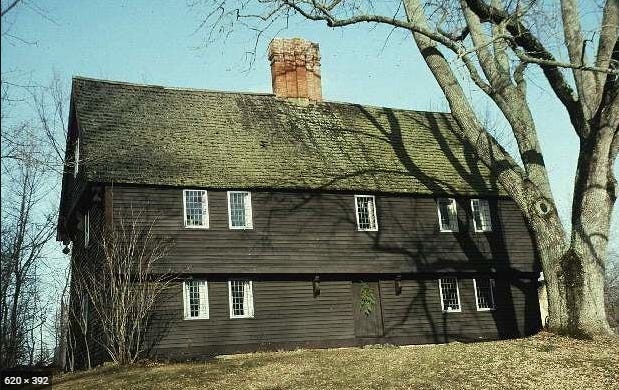
Elaine Erskine Dow, the Parson Capen House, and the Living Legacy of Simples & Worts
How a Topsfield teacher, curator, and garden historian, Elaine Erskine Dow, transformed a First Period house and its herb garden into a community of learning—and inspired the growing library of history, gardening, herbal crafts, and practical knowledge we are building today.
History
In 1982, Elaine Erskine Dow published Simples & Worts: Being All About the Herbs of Our Puritan Forefathers (and Mothers) with Additional 17th and 18th Century Miscellany. The Herb Society of America’s library catalog records the title and its Topsfield publication.
Dow’s obituary describes the living work behind the book. She was a teacher, curator of the Parson Capen House, planner of the Capen Herb Garden, organizer of the Priscilla Capen Herb Society, period-garden consultant, lecturer, and natural-history educator.
The setting mattered. The Parson Capen House was built in the summer of 1683 on a twelve-acre Topsfield lot. It survives on its original site and is preserved by the Topsfield Historical Society. The National Park Service landmark nomination calls the house a remarkable survival of a seventeenth-century New England dwelling.
Lore
A memorial can easily turn a person into a legend and sand away the work. We want to remember Elaine Dow differently: as someone who researched, planted, taught, staged, wrote, and invited people into a garden.
The phrase “simples and worts” carries us into an older household world. A simple could mean a single plant used on its own. Wort is an old word associated with plants and herbs. But lore becomes most valuable when it sends us back to named plants, surviving structures, primary records, and the people who cared for them.
The House and Garden
The Priscilla Capen Herb Garden was not merely scenery beside an old house. It became a place where volunteers interpreted seventeenth-century household plants through gardens, teas, crafts, charts, and public events. Dow’s writing emerged from that local practice.
A house changes how we understand a garden. Hearths, storage rooms, worktables, low beams, seasonal light, and New England weather all shaped what people could grow, preserve, prepare, and keep.
Her Legacy—and Our Promise
This new Simples & Worts series follows Dow’s example without pretending that the past was simple. Every article will use the same reader-friendly structure: History, Lore, In the Garden, Harvest & Preservation, Make Something, Modern Caution, and Sources.
We will distinguish documented history from reconstruction. We will not turn folklore into medical advice. We will name uncertainty, identify plants carefully, and correct earlier claims when better evidence appears. That is how a living tradition stays alive without losing its integrity.
Explore the Houses Around the Herbs
Herb gardens make more sense when we also understand the rooms, hearths, timbers, storage, labor, and weather of the houses around them.
Continue the journey with our illustrated Amazon guide, Exploring Massachusetts’ First Period Museum Houses (1620–1725). It introduces surviving museum houses across the Commonwealth and the architectural world in which early New England families lived.
Begin the Series
Next: Garlic After the Harvest: Cure It, Keep It, Craft With It—a practical guide to growing garlic, curing the bulbs, and turning the harvest into useful seasonal crafts.
Sources and Further Reading
· Herb Society of America: Elaine Dow bibliography
· Topsfield Historical Society: Parson Capen House
· National Park Service: Parson Capen House landmark nomination
· Elaine Dow obituary, The Boston Globe via Legacy
And here’s to sharing our herbal lifestyle with you!
Phil Wilson


