


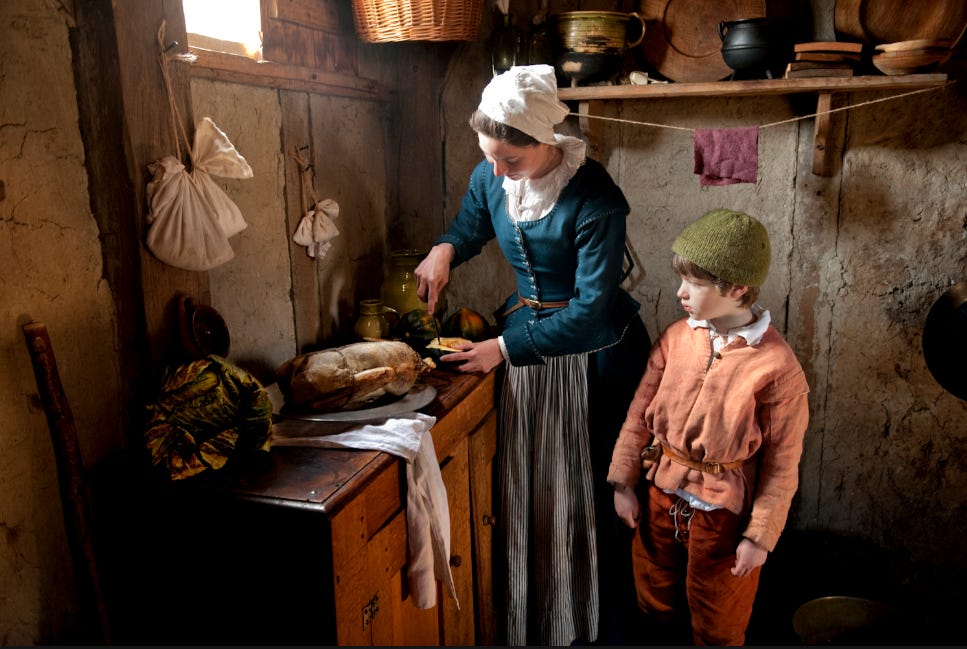
The following is historical fiction. The family is invented, but the work, materials and household setting are inspired by documented early New England practices.
The frost had silvered the pasture before Abigail opened the door.
“Bring the baskets,” she told the children.
Samuel groaned. He was ten and had already decided that berry picking was work best left to younger sisters.
His mother did not look back.
“You’ll be glad of the candles in December.”
That settled it.
His sister Mercy took the smaller basket. Six-year-old Ruth carried nothing at all except a piece of brown bread wrapped in cloth and the conviction that this made her indispensable.
They walked toward the scrubby fields beyond the house.
The bayberry bushes grew where little else seemed interested in growing. Wind bent them. Salt reached them. The soil was thin and sandy. Still they remained.
Abigail rubbed one leaf between her fingers and held it beneath Ruth’s nose.
“Smell.”
Ruth smiled.
The leaf carried the sharp scent of resin and wintergreen woods.
“Candle bush,” she said.
Her mother nodded.
“Candleberry.”
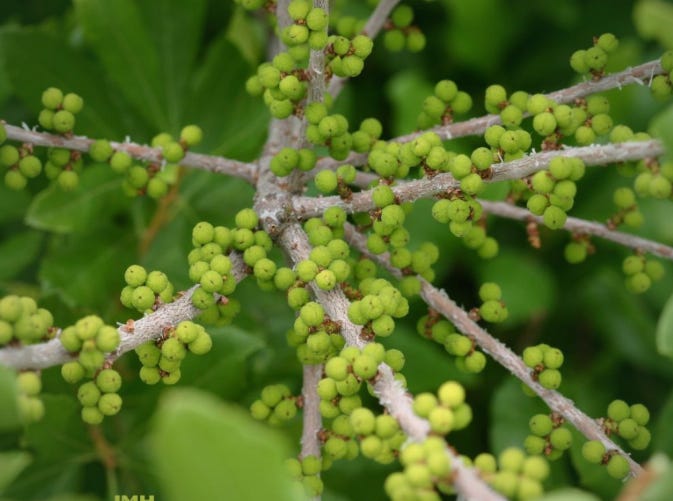
Picking the Gray Berries
The berries did not look valuable. That was Samuel’s opinion. Plus, the decision comes down to green or gray berries?
They were tiny and pale and dull, certainly nothing like the red berries he thought ought to belong to Christmas.
But his mother showed him the faint waxy coating on the GRAY berries.
“That,” she said, “is what we have come for.”
They pulled the berries into their baskets by hand. Some came easily. Others clung stubbornly to their twigs.
Mercy worked quickly. Samuel found a better method and stripped several clusters at once. Ruth mostly ate her bread.
By midday, their fingers were cold and their baskets much less full than Abigail had hoped.
She looked over the shrubs.
“We shall come again tomorrow.”
Samuel groaned a second time.
NOTE:
Bayberry candles are made from the gray, waxy coating on the surface of the berries.
The Gray/White Wax: The actual fruit of the bayberry shrub (such as Myrica pensylvanica or wax myrtle) is small and dark, but it is covered in a dense, powdery, grayish-white or bluish-gray natural wax coating.
The Process: When these gray-coated berries are boiled in water, the gray-white wax melts, floats to the top, and is skimmed off.
The Color: Once rendered and refined, this extracted wax has a pale, translucent greenish tint (and a natural woodsy, herbal scent), which is why the resulting candles are traditionally green.
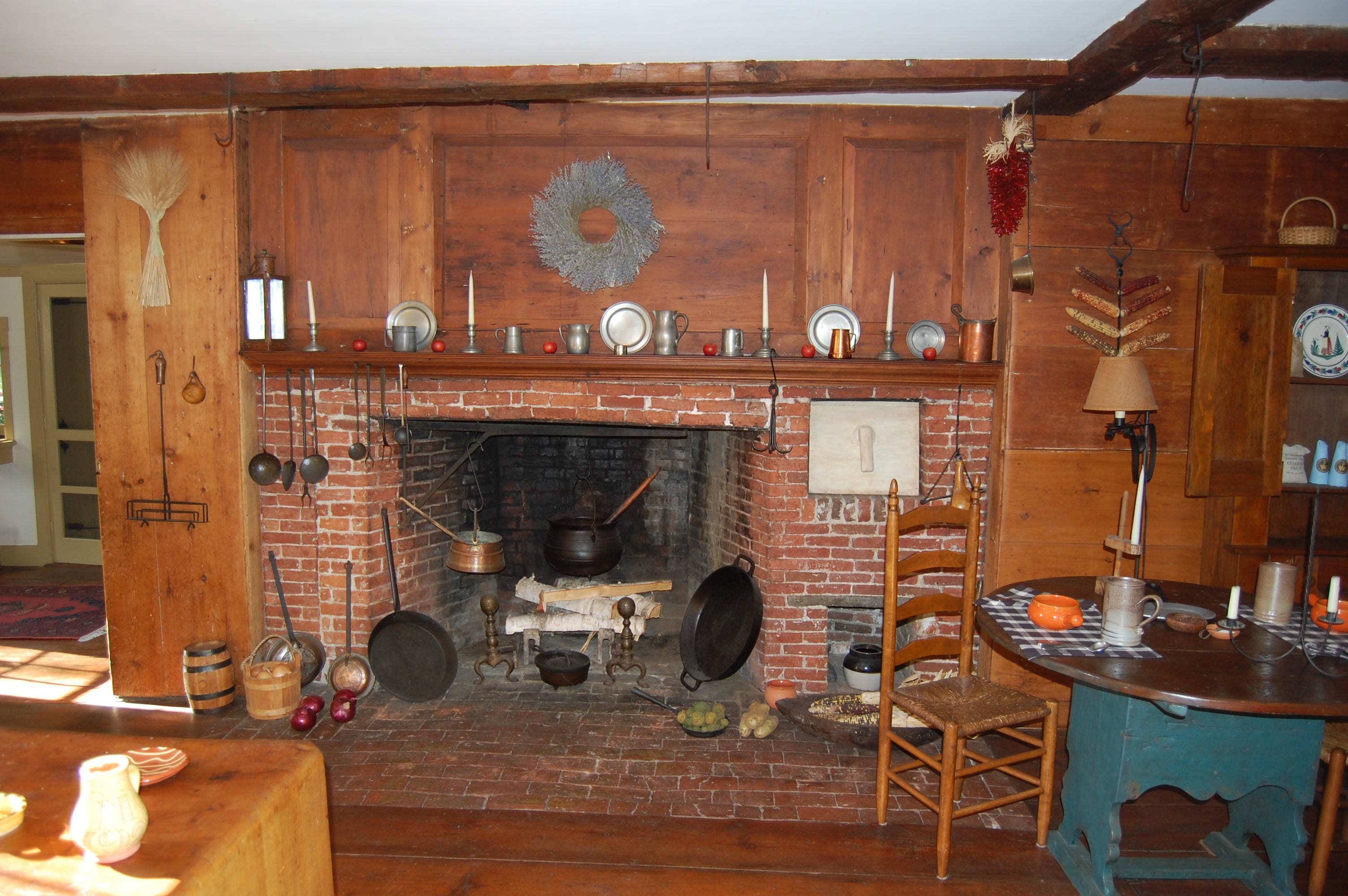
The Kettle
Back at the house, Abigail poured the berries into the black iron kettle. Water followed. The kettle hung over the fire.
Soon the berries began to soften. A faint greenish film appeared on the surface.
Mercy leaned too close.
“Stand back,” her mother said.
The girl obeyed.
Abigail skimmed the surface carefully. The children watched as the wax gathered.
It looked like very little.
Hours of picking had become a few fragile pieces of wax.
Samuel frowned.
“All that?”
“All that,” Abigail said.
“For this?”
“For this.”
She held up the wax.
“And tomorrow we gather more.”
Why Not Use Tallow?
They had tallow. Every household did when animals were butchered.
Tallow candles were practical. They were also smoky and could smell unpleasant.
Bayberry was different.
Abigail had learned the process from another woman several winters earlier. A good bayberry candle burned with a cleaner flame and carried a pleasant fragrance.
But no sensible household would use such candles every night.
Too many berries. Too much labor. Too much time.
That was exactly why Abigail wanted them.
Christmas was not every night.
Rendering the Wax
The first wax was not clean enough. So Abigail melted it again. She strained it. She skimmed away bits of leaf and berry.
The children took turns watching.
Samuel’s boredom slowly became interest. He had never considered that a candle could begin on a shrub.
Mercy asked whether they could make a dozen.
Her mother laughed.
“Pick berries for a week and perhaps we shall discuss it.”
The wax hardened into a greenish cake.
Not large.
But enough to begin.
Preparing the Wicks
Abigail cut lengths of cotton wick. Each was tied to a small stick. The children lined them beside the hearth.
Ruth immediately tangled three. Mercy untangled them. Samuel held his wick straight and regarded himself as an expert.
The wax warmed slowly. Abigail blended it with another candle wax so the finished taper would be stronger.
Then she showed them how to begin.
Dip. Lift. Turn. Cool. Again.
Dip. Lift. Turn. Cool.
At first there seemed to be almost nothing on the wick. Then the thinnest shell appeared.
Another dip. Another. Another.
The candle began to grow.
The Rhythm of Candle Dipping
Soon the room developed its own rhythm.
The fire snapped. The kettle steamed. Wicks descended and rose.
Abigail corrected crooked candles with warm fingers. Mercy counted every dip. Samuel tried to make his taper thicker than his sister’s. Ruth finally fell asleep on a bench.
Outside, the November wind moved through the bayberry shrubs they had stripped that morning.
Inside, the berries had become light.
A Candle for Christmas Eve
Abigail set aside the best two tapers.
“These are not for ordinary nights,” she said.
Samuel knew better than to argue.
One would be burned on Christmas Eve. The other might be given away.
Mercy looked horrified.
“After all that work?”
Her mother smiled.
“That is what makes it a gift.”
The girl considered this carefully.
Perhaps for the first time, she understood that generosity could be measured in labor as much as in money.
The Winter Table
Weeks passed. Snow came. The days shortened.
On Christmas Eve, Abigail placed one of the bayberry candles on the table.
Samuel stared at it. He remembered the cold field. The scratched hands. The baskets. The berries. The black kettle. The green wax. The endless dipping.
Now the candle seemed entirely different.
His father struck a flame. The wick caught. A small golden light filled the room.
Mercy whispered, “It smells good.”
Abigail smiled.
The candle burned while they ate.
Luck to the House
No one in Abigail’s family knew exactly when the old saying began. Perhaps they had heard a version from a neighbor. Perhaps someone added to it later.
But before the children went to bed, Abigail said something they would remember:
“Let the bayberry burn bright tonight.”
“For luck?” Mercy asked.
“For enough,” said her mother.
“Enough food. Enough warmth. Enough work. Enough kindness. And enough light to find our way through winter.”
Samuel looked at the candle.
Its flame was small.
But after gathering every one of those berries himself, it seemed very bright indeed.
SIMPLES & WORTS STORY NOTE
This story is fictional. Abigail, Samuel, Mercy and Ruth are invented characters.
But the underlying household practices are historically grounded: bayberries were gathered by hand, their wax was rendered in hot water, the wax was skimmed and refined, and candles could be made by repeated dipping.
The extraordinary labor required to produce bayberry wax is precisely what made the resulting candles so special.